Saturday, October 13, 2007
Don't be a carbon bigfoot! Energy-saving Software
October 12, 2007
View online Manage newsletters Unsubscribe Send us feedback
Energy-saving applications
Behold, the most popular energy-saving applications for the week ending October 12.
1. CO2 Saver - Reduce your carbon footprint by optimizing your PC's energy usage.
2. SpeedFan - Save energy by optimizing your system's fan speed, temperature, and voltage.
3. Sleepy - Conserve energy by automating your computer to shut down at a specific time every day.
4. WattchIT - Compare your monthly utility bills to your actual usage and learn how you can save.
5. WorldCoolers - Get desktop alerts and recent news articles about global warming and other climate issues.
----- Original Message -----
From: Download Dispatch for Windows
Sent: Saturday, October 13, 2007 6:38 AM
Subject: CNET Download Dispatch: Don't be a carbon bigfoot
environmement, energy, co2, saving, computers, hardware, software

Saturday, August 25, 2007
Green Roofs: An Introduction with Pretty Pictures
By Philip Proefrock
Wed, 22 Aug 2007
It's not just for hobbits anymore. The logic of green roofs is becoming more apparent. We can minimize our bills while maximizing the beauty of the urban landscape. And every day it's becoming a little easier to live in a house that just happens to have plants growing on it.

Vegetated roofs, or green roofs have a layer of living plants on top of the structure and the waterproofing elements. There are really two types of green roofs, intensive and extensive.

Intensive green roofs often have a soil depth of a foot or more, and require substantial structural elements to support the weight of the whole roof. Intensive roofs can sustain a wide range of plant species and typically require a fair amount of regular maintenance. Because of the additional demands they impose, intensive roofs are much less common than extensive roofs.

Extensive roofs are much shallower, typically only 2 to 4 inches deep, and are planted with particularly hardy plants. Over the last 50 years or so, this kind of roof has been developed, specially in Europe,. But now they are becoming increasingly common in the United States.
Why are green roofs such a great idea?
First, they help to reduce roof stormwater runoff. In some cases, this can help reduce the size of stormwater pipes, and the amount of stormwater that needs to be treated by municipal water treatment. In a light rainfall, a building with a vegetated roof can have no stormwater runoff at all. Green roofs also protect the roof membrane from sunlight, which breaks down the roofing
material. Having even a couple inches of soil helps to greatly extend the life of the roof, and a longer lifespan means less material ends up in landfills from re-roofing buildings after the membranes have failed.

Green roofs keep the roof cooler, which helps to reduce the heat-island effect, which contributes to cities being hotter than the surrounding countryside. This can be beneficial to the building in reducing its summertime cooling load.
A green roof is also a source of oxygen and provides a habitat for some birds. Birds and insects can find homes much more readily in the living environment of a green roof, where an ordinary roof is nearly barren. And yes, it's even possible to graze goats.

What is a green roof made of?
Starting from the top, an extensive green roof has a layer of plants, which are typically sedums. These are low-growing, shallow rooting, drought tolerant plants. There are many different varieties of sedum, with different different coloration and different flowerings, so that a roof can have a varied appearance, rather than looking like an entire crop of a single variety. The plants are in a growth medium, an engineered mixture of lightweight soils, vermiculite, and other materials that provides a good environment for the sedum.
The shallow depth of the soil aids in keeping weeds from establishing themselves on the roof, since most weeds cannot survive in the arid and shallow soil conditions on a vegetated roof. Local plants that can survive in that environment may establish themselves on the roof, as well. Underneath the soil are several membrane layers, rather than just a single membrane roof. There is also a drainage layer (to allow excess water to move freely, rather than lifting the soil and having it flow off the roof in a mudslide, and a root barrier layer, which keeps the roots from penetrating the roof. The roof membrane sits on the roof deck, insulation, or structure of the building much like a conventional roof.

Can I put a green roof on my house?
Green roofs make sense for residential use as much as for commercial buildings. However, retrofitting a green roof onto an existing house is not a simple matter because of the extra weight a vegetated roof adds. Most roofs are not structurally strong enough to support a vegetated roof without some reinforcement. Green roofs also work best on lower slopes. They can be installed on steeper pitched roofs, but the design and installation is more difficult and
requires additional care.
The added cost of a vegetated roof versus a conventional shingle roof, and the relatively small number of contractors familiar with installing them are probably the biggest limiting factors. A house with a suitably pitched roof would still likely need structural evaluation from an architect or engineer before going ahead with a retrofit, and some structural reinforcement is likely
to be needed.

Does a green roof have to be mowed?
A sedum covered roof is naturally self limiting in size. Most sedums grow only a few inches tall. As mentioned above, it is also fairly self weeding, due to the inhospitable environment it offers to most weed species. An extensive roof planted with prairie grasses on the Ducks Unlimited National Headquarters in Winnipeg, Manitoba uses a controlled burn of its upper roof every three years to repropogate the prairie plants. The 16 inches of soil protects the building
from any damage while the grass fire helps remove weed species and assists prairie species which need periodic fires as part of their life cycle.
What Does the Future Hold?
We were excited a while back to announce Toyota's green roofing tile. These modular, interlockable grass tiles make green roofing an absolute cinch. They're a lot lighter than other methods, and installation is a breeze. At about $34 per tile, they're still expensive, but prices would of course drop if demand were to increase.

And, second, I and many others would like to see Friedenreich Hundertwasser's vision of every horizontal surface being returned to nature:
"The true proportions in this world are the views to the stars and the views down to the surface of the earth. Grass and vegetation in the city should grow on all horizontal spaces - that is to say, wherever rain and snow falls vegetation should grow, on the roads and on the roofs. The horizontal is the domain of nature and wherever vegetation grows on the horizontal level man is off limits; he should not interfere. I mean taking away territories from nature, which human beings have always done."

Green Roof Resources:
-The EPA on Green Roofs-Greenroofs.com-Green Roofs on Wikipedia-Green Roofs for Healthy
Cities-
Image Key:
1. Hundertwasser's Waldspirale, Austria...From WikiMedia Commons
2. Green Rooftops from Swishphotos on Flickr from the Faroe Islands
3. Grass Roof in Oswego Illinois, USA, from Greg Robbins on Flickr
4. Solaire Green Roof in Battery Park City, NY from Birdw0rks on Flickr
5. Goats on a Roof in Wisconsin, from Driftless Media on Flickr
6. Grass Roofs in Iceland from Pietroizzo on Flickr
7. Green Roof in Tokyo from Dissonanc3 on Flickr
8. Toyota Roof Tiles from Toyota Roof Garden
9. Hunderwasser's village model, on display at Kunsthaus in Vienna.
Thursday, July 12, 2007
Electrical Industry's First PV Systems Textbook Published

Bethesda, Maryland [RenewableEnergyAccess.com] Photovoltaic Systems - the first comprehensive guide to the installation of commercial and residential solar energy systems has been published by the National Joint Apprenticeship and Training Committee for the Electrical Industry (NJATC). Authored by Jim Dunlop, the textbook covers the principles of photovoltaics (PV) -- the direct conversion of solar energy into electricity -- and how to incorporate it into stand-alone or utility-connected electrical systems. Illustrations clarify concepts, photographs show how components are integrated to form complete PV systems. A CD-ROM provides interactive worksheets, quizzes, calculators, video clips and animated graphics depicting PV principles and operation and links to additional resources. NJATC is a joint program of the International Brotherhood of Electrical Workers (IBEW) and the National Electrical Contractors Association (NECA) that has been training journeymen in the design and installation of solar energy systems for more than a decade.
Thursday, June 7, 2007
Revolutionary Solar Powered Air Conditioner

June 5, 2007
AquaCell Acquires Patents to Revolutionary Solar Powered Air Conditioner
http://www.renewableenergyaccess.com/rea/partner/story?id=48815
AquaCell to Manufacture and Sell Solar Powered Air Conditioner
Press Release from SolCool Solar Air Conditioning
June 5, 2007 - Redlands, CA
AquaCell Technologies, Inc. ("AquaCell") (AQUA) today announced that it has closed the acquisition of GPM, Inc. GPM manufactures the world's only patented solar powered air conditioner.
Kevin Spence, AquaCell's President and CFO said, "We are extremely excited to enter the alternative energy space with an affordable solar powered air conditioner." Mr. Spence continued, "The solar powered air conditioner provides climate control at a fraction of the cost of powering traditional air conditioners. We are excited to be a part of the effort to reduce greenhouse emissions by taking users off of the power grid."
James Witham, AquaCell’s Chief Executive Officer said, "This acquisition, the culmination of eight months of combined effort on the part of AquaCell and GPM, solidly positions AquaCell in the emerging alternative energy space." Mr. Witham continued, "Having an air conditioner powered through the energy of the sun has far reaching applications for daily cooling requirements for homes and industry, including modular buildings, as well as for emergency backup cooling, such as senior citizen housing and remote telecommunication facilities."
AquaCell’s solar powered air conditioner uses less than 25% of the power of traditional air conditioners of the same size. Using DC (direct current) power, AquaCell’s solar powered air conditioner can be powered by only two photovoltaic (solar) panels, freeing the user from the electric utility grid. It is the only climate control equipment in the world that takes direct, renewable DC input to power its internal 24-volt operating system. Use of the air conditioner eliminates the risk of loss of air conditioning due to power shortages and blackouts.
The initial versions of the solar air conditioner have been purchased by the US military, corporations and international real estate developers. In connection with the acquisition, the manufacturing will be relocated from Texas to Southern California.
Kevin Spence, AquaCell’s President and CFO said, "We are extremely excited to enter the alternative energy space with an affordable solar powered air conditioner." Mr. Spence continued, "The solar powered air conditioner provides climate control at a fraction of the cost of powering traditional air conditioners. We are excited to be a part of the effort to reduce greenhouse emissions by taking users off of the power grid."
Since announcing the letter of intent, AquaCell has received numerous purchase requests and interest from varied market segments that have been seeking green solutions to reduce energy dependence, pollution and global warming, while at the same time dramatically reducing energy costs.
Brighton Capital, Ltd. of Los Angeles, CA, assisted and advised AquaCell Technologies in the connection with the identification and negotiation of the acquisition with GPM. Brighton Capital has also been retained by AquaCell to identify other possible acquisition candidates in the renewable/alternative energy space.
About AquaCell Technologies, Inc.: AquaCell Technologies, Inc. is based in Rancho Cucamonga, CA. Historically, its AquaCell Media, Inc. subsidiary installed its patented self-filling Aquacell 1000 Bottled Water Cooler Systems free of charge into various locations generating revenue through the sale of advertising. AquaCell’s direction will now be focused on the acquisition and growth of GPM and other similarly related businesses in the renewable/alterative energy space.
AquaCell Acquires Patents to Revolutionary Solar Powered Air Conditioner
http://www.renewableenergyaccess.com/rea/partner/story?id=48815
AquaCell to Manufacture and Sell Solar Powered Air Conditioner
Press Release from SolCool Solar Air Conditioning
June 5, 2007 - Redlands, CA
AquaCell Technologies, Inc. ("AquaCell") (AQUA) today announced that it has closed the acquisition of GPM, Inc. GPM manufactures the world's only patented solar powered air conditioner.
Kevin Spence, AquaCell's President and CFO said, "We are extremely excited to enter the alternative energy space with an affordable solar powered air conditioner." Mr. Spence continued, "The solar powered air conditioner provides climate control at a fraction of the cost of powering traditional air conditioners. We are excited to be a part of the effort to reduce greenhouse emissions by taking users off of the power grid."
James Witham, AquaCell’s Chief Executive Officer said, "This acquisition, the culmination of eight months of combined effort on the part of AquaCell and GPM, solidly positions AquaCell in the emerging alternative energy space." Mr. Witham continued, "Having an air conditioner powered through the energy of the sun has far reaching applications for daily cooling requirements for homes and industry, including modular buildings, as well as for emergency backup cooling, such as senior citizen housing and remote telecommunication facilities."
AquaCell’s solar powered air conditioner uses less than 25% of the power of traditional air conditioners of the same size. Using DC (direct current) power, AquaCell’s solar powered air conditioner can be powered by only two photovoltaic (solar) panels, freeing the user from the electric utility grid. It is the only climate control equipment in the world that takes direct, renewable DC input to power its internal 24-volt operating system. Use of the air conditioner eliminates the risk of loss of air conditioning due to power shortages and blackouts.
The initial versions of the solar air conditioner have been purchased by the US military, corporations and international real estate developers. In connection with the acquisition, the manufacturing will be relocated from Texas to Southern California.
Kevin Spence, AquaCell’s President and CFO said, "We are extremely excited to enter the alternative energy space with an affordable solar powered air conditioner." Mr. Spence continued, "The solar powered air conditioner provides climate control at a fraction of the cost of powering traditional air conditioners. We are excited to be a part of the effort to reduce greenhouse emissions by taking users off of the power grid."
Since announcing the letter of intent, AquaCell has received numerous purchase requests and interest from varied market segments that have been seeking green solutions to reduce energy dependence, pollution and global warming, while at the same time dramatically reducing energy costs.
Brighton Capital, Ltd. of Los Angeles, CA, assisted and advised AquaCell Technologies in the connection with the identification and negotiation of the acquisition with GPM. Brighton Capital has also been retained by AquaCell to identify other possible acquisition candidates in the renewable/alternative energy space.
About AquaCell Technologies, Inc.: AquaCell Technologies, Inc. is based in Rancho Cucamonga, CA. Historically, its AquaCell Media, Inc. subsidiary installed its patented self-filling Aquacell 1000 Bottled Water Cooler Systems free of charge into various locations generating revenue through the sale of advertising. AquaCell’s direction will now be focused on the acquisition and growth of GPM and other similarly related businesses in the renewable/alterative energy space.
View a video of the KEYE 42 CBS SolCool Air Contioner plus information of their wind turbines at the company website: http://www.solcool.net/video.htm
Sunday, May 27, 2007
Holy Land Camping Mission Statement
 Explore the Holy Land the way Abra(ha)m did, by setting up (GREEN) campsites from place to place.
 Genesis 13:3 Then they continued traveling by stages toward Bethel, to the place between Bethel and Ai where they had camped before. 4 This was the place where Abram had built the altar, and there he again worshiped the LORD.
At the moment, of course, it is impossible to explore all the land promised (mandated) to Israel (Balfour Declaration) due to the false claims of the Arabs/Moslems and the Islamic strategy of terrorism to get what they want. This will soon change when Israel will be forced to deal with their hostile enemy and eventually win back control of all the land promised to the Jews - see Prophetic Wakeup call! Then it should be possible to reverse Abraham's steps, starting at the Red Sea in the Sinai and ending at the Euphrates River - see "Pursue Israel's boundaries." It will not just be a matter of exploring the land, but also of settling it by establishing campsites that can develop into communities - similar to the present "outpost" strategy to acquire land.
It is still early days, but a good time for the venture to take its first baby steps, since it will start filling the present void of camping facilities in Israel. All it will take to get it going is to set up a workshop/office close to the airport to start putting together campers and camping equipment and work on logistics.
Pioneers, Jewish & Christian, are therefore invited to contact HOLY LAND INC. via Feedback to become partners in the project, or potential clients - as new immigrants (olim) or tourists. Please see also, Founder's Report
Green campsites become green communities
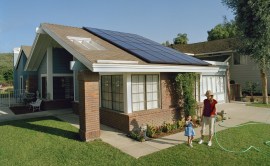
This blog complements the project Holy land Camping in Israel and of that particularly the mission to establish strictly green campsites. The plan is to use campsites to settle Zionist refugees from the nations in Israel and to turn them into permanent green communities, villages and even towns eventually.
Subscribe to:
Posts (Atom)